Battery Energy Storage Systems, also known as BESS, are a critical part of modern power infrastructure. These systems help utilities, facilities, data centers, renewable energy projects, and industrial operations store electricity and deliver power when demand is highest.
Large-scale battery storage projects require more than space. They require secure storage, careful handling, equipment staging, transportation coordination, crane support, and a team that understands how to keep critical equipment moving safely and efficiently.
Mission Critical Storage provides the space, access, and support needed to help manage BESS equipment before it reaches the jobsite.
When a jobsite is not ready, your equipment still needs protection, organization, and easy access.
Mission Critical Storage offers secure indoor and outdoor storage options for battery energy storage equipment, project materials, containers, enclosures, HVAC units, electrical equipment, and other mission-critical assets.
Our facility supports projects that need short-term staging, long-term storage, delivery coordination, or turnkey support between arrival and final placement.
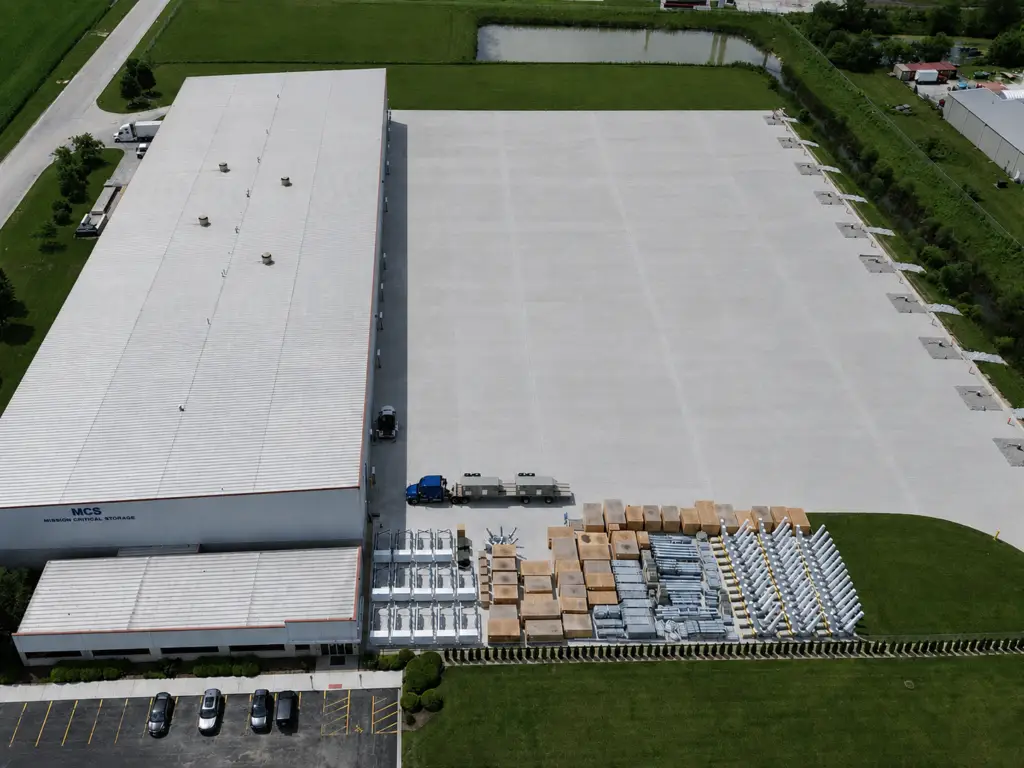
BESS projects often involve large, heavy, high-value equipment that crews must handle with care. Mission Critical Storage helps customers reduce jobsite congestion, protect equipment before installation, and keep deployment schedules organized.
From initial delivery to storage, staging, and movement toward the jobsite, MCS is built to support the heavy equipment and logistics side of battery energy storage projects.
Storing other mission-critical equipment too? See our full Equipment Storage Solutions →
Whether your project needs secure storage, outdoor space, power access, unloading support, or coordination for delivery and final placement, Mission Critical Storage is ready to help.
Ready for business. Ready for you.
Call (708) 689-4444 or email [email protected]
Common questions about Battery Energy Storage System storage, staging, and logistics support at Mission Critical Storage.
Our team is ready to help with anything specific to your BESS project.
BESS storage refers to the secure storage and staging of Battery Energy Storage System equipment before installation. This may include battery containers, enclosures, HVAC equipment, electrical components, and other project materials.
Yes. Mission Critical Storage supports BESS projects with secure indoor and outdoor storage, equipment staging, unloading support, crane and forklift support, logistics coordination, and jobsite delivery support.
Yes. In fact, Mission Critical Storage offers outdoor storage options, including concrete yard space and outdoor power options for certain project needs.
Yes. Likewise, Mission Critical Storage offers indoor storage space for critical equipment that needs protected, organized, and accessible storage before deployment.
Yes. For example, MCS can help unload, stage, and manage critical equipment using available handling equipment such as forklifts, telehandlers, and overhead crane support.
Utilities, contractors, energy storage developers, data center teams, industrial facilities, renewable energy companies, and logistics providers may need BESS storage and staging support before equipment reaches the final jobsite.
Ideal range is 50–77°F (10–25°C) with low humidity — extremes in either direction degrade lithium-ion cells and raise fire risk. Mission Critical Storage’s climate-controlled indoor space in Crete, IL keeps BESS equipment inside that range until it’s ready for the jobsite.
A standard 20-foot BESS container can weigh up to 45 tons and counts as hazardous cargo because of its lithium-ion cells. As a result, a storage site needs reinforced concrete pads, heavy-haul truck access, and rated handling equipment — all part of what Mission Critical Storage provides on-site.
A laydown yard is a secure staging area where equipment is organized before it moves to final placement. A disorganized laydown yard is one of the most common causes of costly BESS delivery delays. Mission Critical Storage’s outdoor concrete yard is built specifically to keep containers and materials staged for sequenced delivery.
Yes — lithium-ion battery containers fall under DOT hazardous materials rules, which affects how teams handle, stage, and store them. Facilities supporting BESS projects need the right permits, equipment, and site design to accommodate that classification, which Mission Critical Storage is set up for.
Jobsites aren’t always ready when equipment arrives, and BESS commissioning timelines leave little room for delay. Storing containers and components at a secure facility until the site is prepared protects high-value assets and keeps the project on schedule — the exact gap Mission Critical Storage fills for BESS projects in the Chicagoland and Northwest Indiana area.